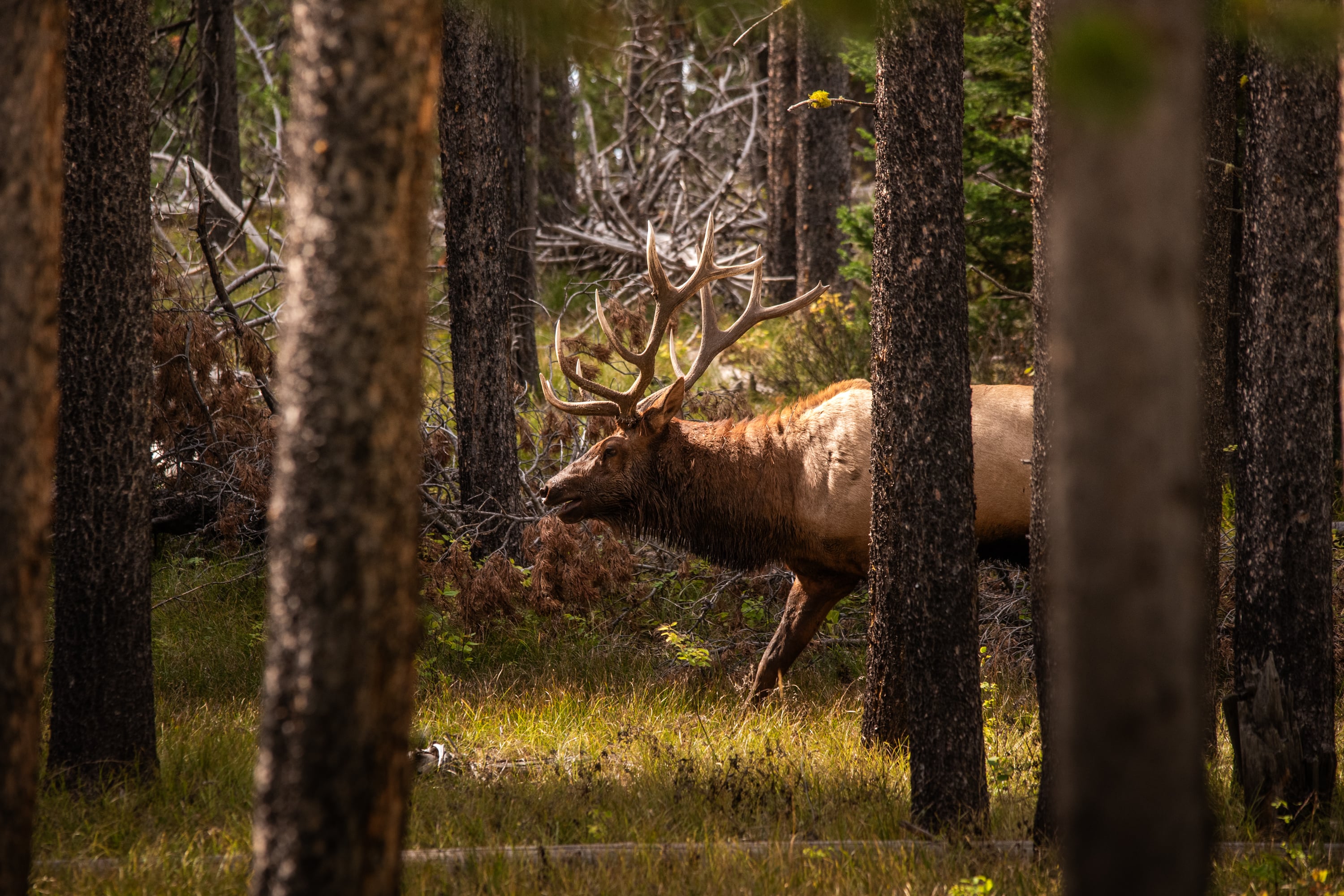
A bull elk with large antlers walking between pine trunks in a sunlit forest.
In October 2024, the BC Parks Foundation, in cooperation with the Province of BC, launched the BC Conservation Fund to support the protection of priority biodiverse areas in British Columbia.
“Federal, Provincial and First Nations governments had signed a Nature Agreement which recognized the twin crises of biodiversity loss and global warming,” says Andy Day CEO of the BC Parks Foundation. “We made a very bold commitment to raise $150 million if the Province matched it, so that there could be real, meaningful, and secure long-term funding for the protection of priority biodiverse areas.”
The Province agreed, and the Foundation established the BC Conservation Fund using a model where it will create long-term stewardship funds if the Province, working with First Nations, go through public land, forest or water use planning processes and designate new conservation areas. That model of long-term funding has been applied successfully around the world to achieve durable conservation outcomes.
After establishing the Fund, the Foundation set up an oversight committee, half of whom are First Nations. It then laid out a strategic plan and set out to design how the Fund would work.
Kaaren Lewis, VP of Conservation at BC Parks Foundation, spent the first six months building a team and connecting with the community to help determine how the Fund could best meet conservation needs across BC. “I had the pleasure of reaching out to the broader conservation community, our key delivery partners, First Nation leaders and experts in granting and other interested parties,” says Kaaren. One need came through clearly—long-term funding for stewardship—further validating why and how the Fund had been established. Rather than supporting projects at just one point in their journey, the BC Conservation Fund provides supports at different stages, from early conservation planning through to the creation and long-term stewardship of new conservation areas. This approach reflects that decisions to create new conservation areas take time, require community input and public and stakeholder process, and don’t end when a place is protected.
In July 2024, the Fund put that model into action with its first public call for First Nation-led or supported area-based conservation projects.
“We reached out to all the nations, and to the broader conservation community, through letters, emails, phone calls, webinars and other channels and we kind of held our breath,” says Kaaren.
That first call led to 40 proposals, with 23 projects getting the go ahead for grants. Two projects from the first round of submissions, Skagit Headwaters and the Meziadin, have recently received a provincial mandate to move forward with conservation planning. Qat’muk, a project from our second round of submissions, also has received provincial mandate.
A provincial mandate is a major milestone: it means the Province will begin formal planning and public consultation toward potential protection of the area.
In addition to the 44 Area-Based Conservation Initiatives the Fund supports, the Fund also supports 15 Biodiverse Area Identification projects across BC, which help us better understand and protect biodiversity by strengthening access to high-quality data, filling key data gaps, and deepening insight into the pressures facing species and habitats. The Fund has also supported education, training, and other initiatives.
Ultimately, the goal is for these investments to advance conservation by providing new tools and data, informing programs, and supporting the establishment and advancement of new conservation areas.
But the impact of the Fund isn't only measured in conservation areas, grants, or data.
“The impact of the Fund is as much about the people and supporting their work and vision as it is in achieving the larger conservation outcomes,” Kaaren says.
That can mean anything from building local conservation capacity through hiring new staff to making major advances in conservation. Some of the most powerful signs of progress come during regular calls with the people doing the work.
“I consistently am surprised, and inspired, and made to feel hopeful through our team’s check-in calls with our fund recipients where we hear directly from the projects and people we support,” says Kaaren.
“We have had and continue to have very strong interest across the board, which was really affirmation that there were needs and we are helping to meet them,” Kaaren says.
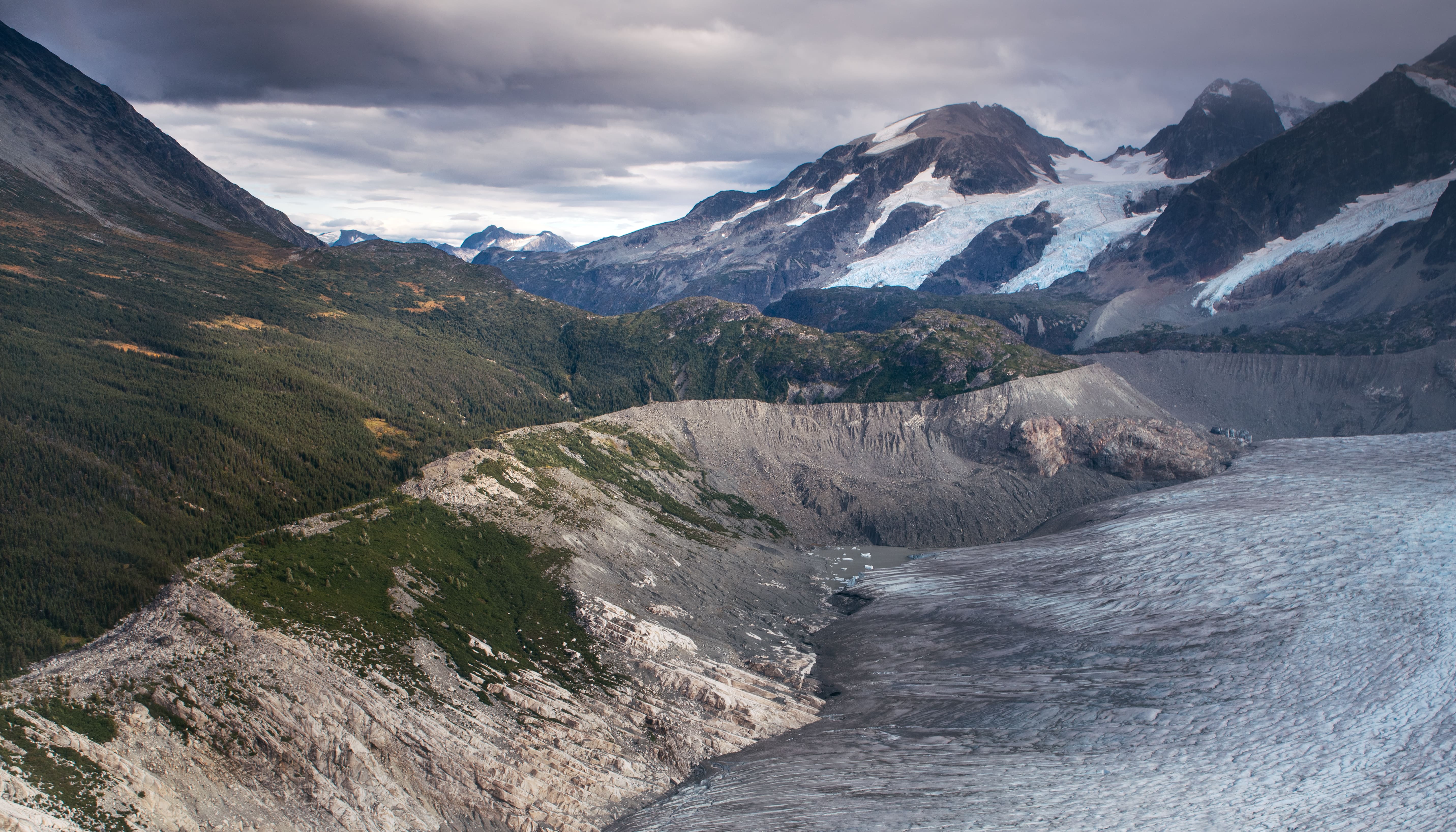
Now, two years later, the Fund has made 64 grants, supporting 99 First Nations and 210 partners across the province. Two long-term stewardship funds have been created for new Provincial government designations including the expansion of Klinse-za/Twin Sisters Provincial Park (to approximately 200,000 hectares including critical habitat for caribou). Other projects are working their way through public planning processes, which takes time.
And there is more to come. Another cohort of projects is expected to be approved in fall 2026, and the Fund will be accepting expressions of interest for further funding opportunities in January 2027.
For Kaaren, the first two years have reinforced her belief in the work and in what can happen when people work together for conservation.
“I just so fundamentally believe in this work at this time...the working together to address biodiversity, climate, and First Nation leadership and reconciliation... and the power of investing funds, time and effort in inspiring people and projects to advance conservation and stewardship in this incredible place we call British Columbia and home.”
Two years in, there’s a tremendous amount of work underway and so much more conservation work ahead. Be part of what comes next. Learn more and support the BC Conservation Fund.
You can find out more about projects supported by the Fund on our project page: https://bcconservationfund.ca/projects